
What is AI outbound? Research, campaign prep and orchestration with human approval
What AI outbound means: software finds leads, researches and prepares campaigns, and a person approves the launch. How it differs from AI SDR tools.
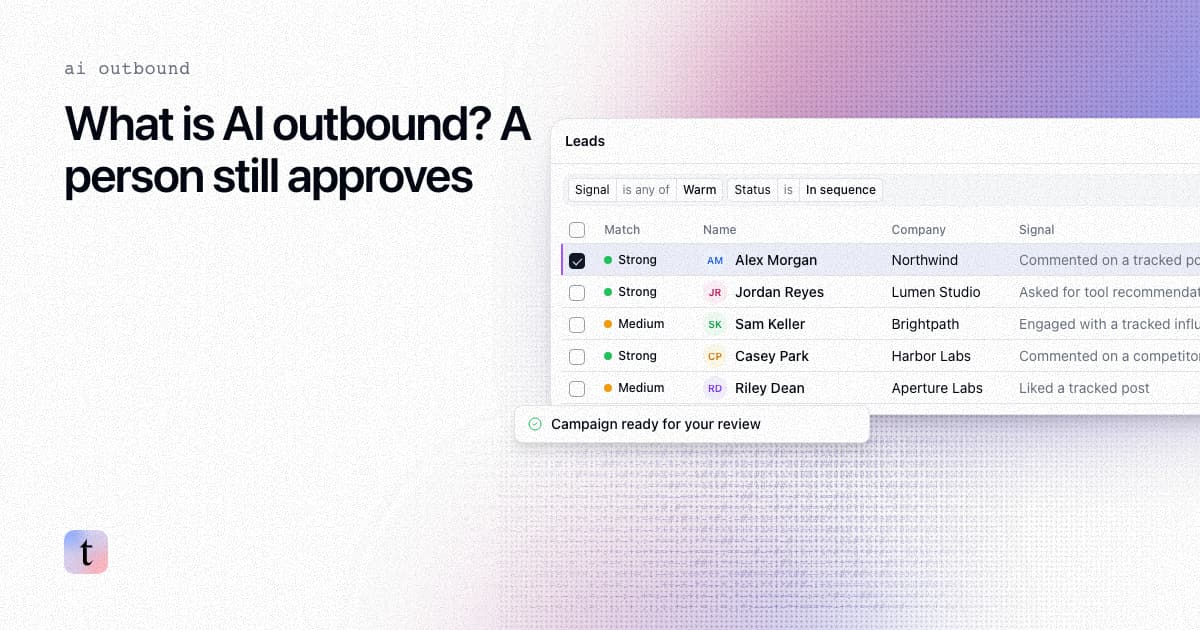
TL;DR: AI outbound is outbound sales work where software helps find leads, research context, prepare campaigns and coordinate steps, while a person still approves the campaign before outreach starts. The useful version pairs signal-based lead discovery with campaign research and previews you can inspect, then a clear launch approval. In traxy, that is the path from a lead audience to a tested campaign to Launch. If a tool only messages a list you already bought, that is automated sending. If it also finds people from relevant LinkedIn activity and keeps a person in the approval loop, it is closer to signal-based outbound.
Last checked: November 9, 2026.
What does AI outbound mean in practice?
Outbound already includes five jobs:
Find who to contact among people who fit your ICP.
Gather context you can cite in a first line.
Prepare outreach across LinkedIn and email steps.
Send and follow up within limits and schedules.
Handle replies and record outcomes.
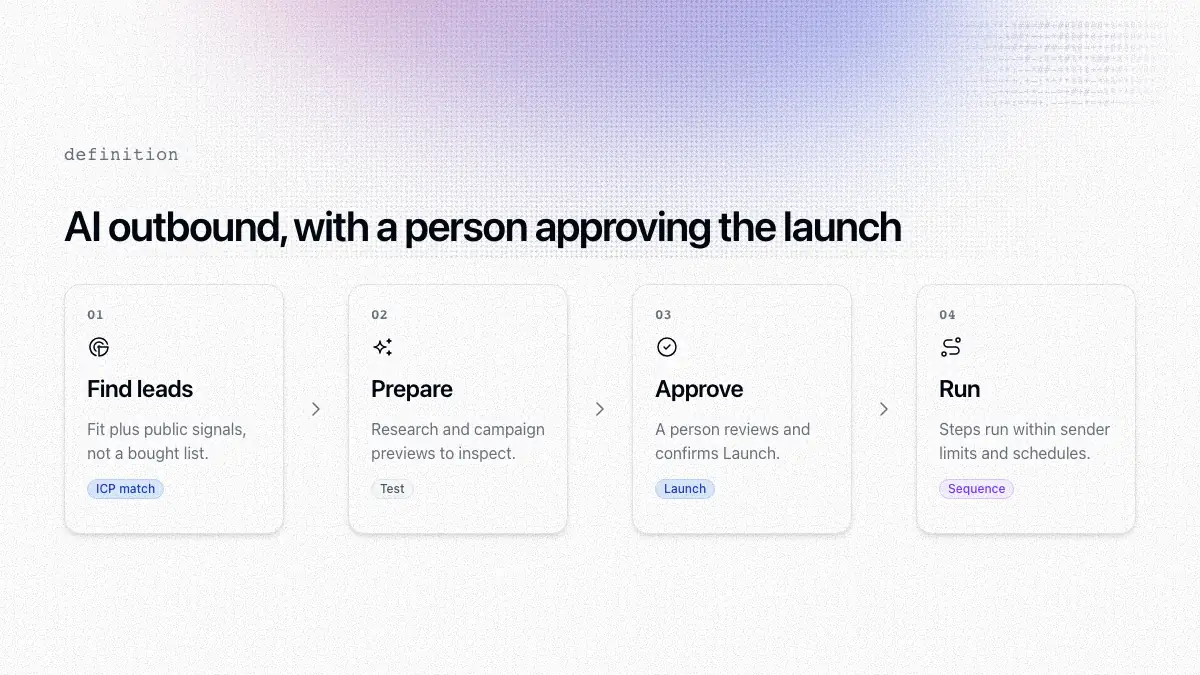
AI outbound uses models and agents to speed up the first three jobs and to help coordinate the fourth. It does not remove the need for a person to decide that an audience and a set of steps are safe to run. In traxy, a campaign applies a research or messaging plan to a lead audience, a test prepares research and previews without sending outreach, and delivery starts only after you confirm Launch (create a campaign, review and launch).
How is AI outbound different from an AI SDR?
"AI SDR" gets used for almost any tool that touches prospecting. Some products focus on writing help, some on dialers or inbox triage, and some claim to replace a human SDR. A narrower split by who finds the leads and who decides:
Approach | Who finds the leads | Who decides what goes out |
|---|---|---|
Manual prospecting | Reps search by hand | Reps |
List plus sequencer | You import a static list | You, or a simple rules engine |
AI copy on a cold list | Still your list | Depends on the tool and your review |
Signal-based AI outbound | Software finds people from fit and public signals | A person approves the launch (in traxy, also individual messages when the delivery mode requires it) |
traxy sits in the last row: qualified leads from LinkedIn engagement and related signals, then campaigns you test and approve. For a side-by-side with manual work, see AI SDR vs manual prospecting.
What should an AI outbound campaign include?
A defined audience, such as a shared view of high-fit leads with a Warm signal
One offer and outcome, so research and messages stay on one promise
Research instructions, the facts you want checked for each lead or company
Message steps on LinkedIn, email or both, with waits where needed
A destination or sender, so delivery has a clear path
A delivery mode, including whether steps need approval
In traxy, you describe the audience, outcome and research needs, name the shared lead view, and review the plan before testing. Research-only work does not require an outreach message (create a campaign).
How does human approval work?
Campaign launch approval. After a test, open Launch and review who will join, leads held by another unfinished campaign, people a completed campaign already contacted, the sender or destination, and the message steps and delivery mode. Confirm Launch only when those settings are correct (review and launch).
Per-message approval when required. If the delivery mode requires approval, inspect the review queue and approve each message, or approve all, before that step proceeds. Approval lets work continue, and delivery can still wait on sender availability, schedule or limits.
When trax proposes another action that needs approval, you inspect the card before choosing Approve or Decline (work with trax).
How does signal-based lead finding change AI outbound?
Many outbound failures start before the copy: the list was wrong, or the timing was random. With signal-based discovery, the input looks different:
People match your lead criteria
Many also show signals tied to your offer
You can open the recorded evidence and any available source links before you reference them
Campaign preparation then works on that audience instead of on a purchased CSV. That combination is signal-based outbound on autopilot: discovery surfaces qualified leads from your targeting and tracked sources, you ask trax to prepare a campaign for a shared view, and approved work moves to the selected destination under your delivery settings (outbound to signal-based leads). For how this looks end to end, see signal-based outbound on autopilot.
What does a safe AI outbound workflow look like?
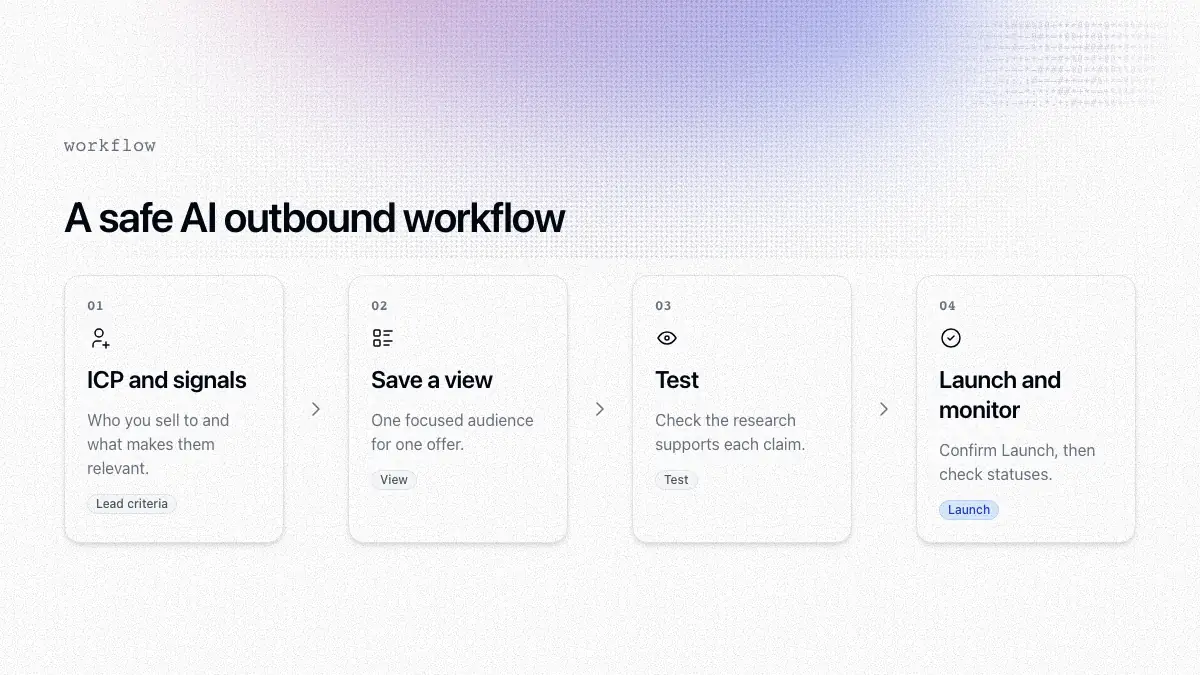
Set your ICP and signals.
Collect qualified leads from discovery runs and tracked profiles and posts.
Save a focused shared lead view for one offer.
Create a campaign for that view.
Run a test. Check that the research supports each claim, and ask trax to revise the plan when a claim is unsupported.
Review the Launch settings and confirm only when the audience and steps look right.
Monitor statuses. Sending, Sent, Not sent and May have been sent mean different things, so check before you try again (sequences).
Handle replies in Inbox or your destination tool.
What should buyers ask before choosing an AI outbound tool?
Does it find leads, or only message a list I upload?
Can I see the evidence behind each lead?
Is there a test that does not send?
Who approves the launch, and can I require approval for each message?
What happens on replies, unsubscribe requests and hard bounces?
Are claims in the messages limited to sources I can open?
If a vendor cannot show the approval path, treat "AI outbound" in its marketing as automated sending. For a comparison of tools in this category, see best signal-based outbound tools.
What AI outbound is not
A guarantee of meetings or revenue
Permission to invent personalization
Launching outreach nobody reviewed
A replacement for an ICP
Two related guides: signal-based outbound for consulting firms and is intent data worth it for small teams.
FAQ
Is AI outbound the same as cold email automation?
Cold email automation can run with no signal and no research per campaign. AI outbound, as defined here, includes lead finding or research plus human approval. Some cold email tools add AI features without changing the list itself.
Does traxy send messages without approval?
For campaigns, delivery starts only after you confirm Launch, and depending on the delivery mode individual messages can also wait in a review queue. For a one-off message, Send is the approval; for a sequence, Activate sequence approves enrollment. A campaign test prepares research and previews without sending.
Can AI outbound work without LinkedIn content from my team?
Yes. Discovery in traxy can use discovery runs based on your lead criteria and signals, plus Tracking of competitor and influencer profiles, specific posts and companies, without you posting. Tracking your own or a teammate's profile adds people who engage with those posts. See do you need LinkedIn content for traxy.
How is this different from hiring SDRs?
SDRs still matter for judgment, calls and complex threads. AI outbound takes over repetitive list work and campaign preparation so people spend their time on review and conversations.
Next step
Pick one offer, save one focused lead view, and run a campaign test before you launch anything. Start with traxy and see who is already engaging in your market.
Keep reading
All Prospecting & Outreach guides
LinkedIn Prospecting (2026): How to Prospect on LinkedIn Step by Step, With Message Examples & Signals That Tell You Who to Contact First
How to prospect on LinkedIn step by step: profile, ICP, list building, message examples, signals, prospecting tools and every outreach guide we publish.
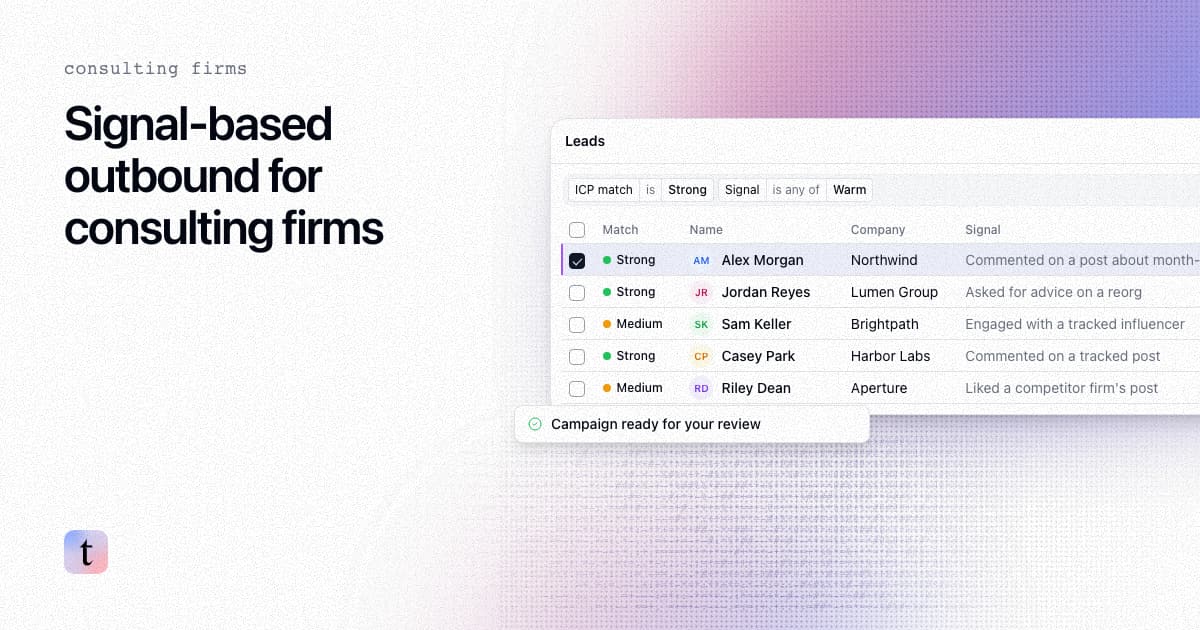
Signal-based outbound for consulting firms: from LinkedIn situations to one clear offer
How consulting firms can turn public LinkedIn situations into outreach for one clear offer: ICP and signals, discovery, campaign tests and first lines.
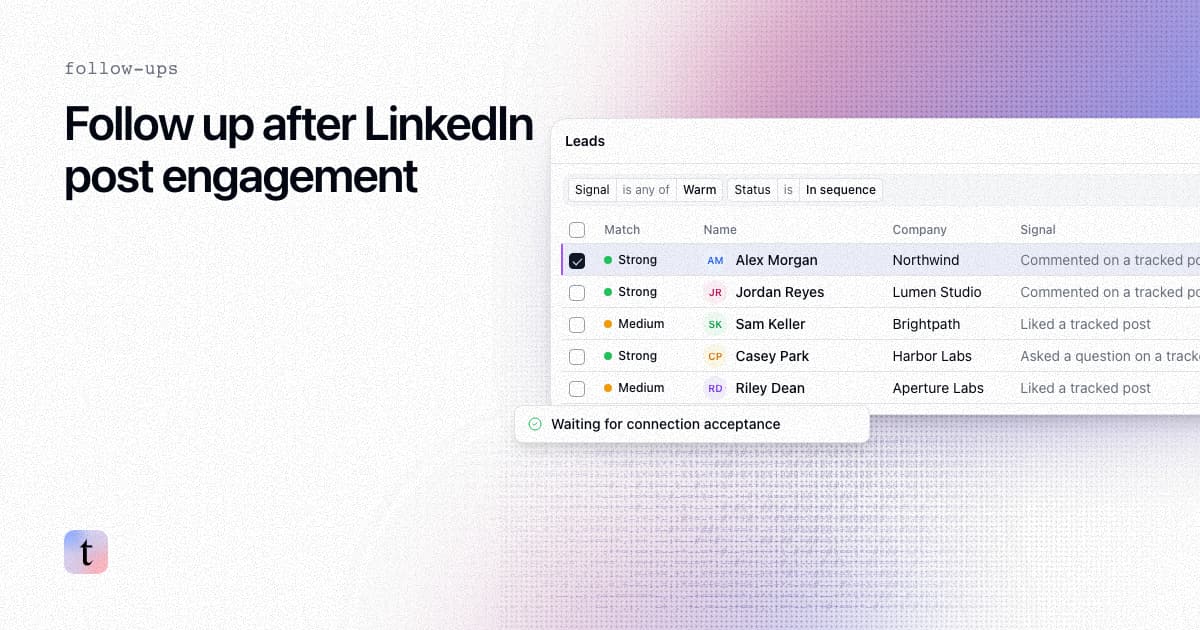
LinkedIn follow-up messages after post engagement: when to wait, what to say, and when to switch to email
How to follow up on LinkedIn after someone engaged with a post: what to say for comments and likes, when to wait, and when to switch to email.