
1.1M Cold Emails: Offering to Send Something Beat Asking for a Call by 51%
Sales.co's study of 1,118,802 cold emails found that offering to send something got 0.76% human replies, against 0.50% for asking for a call.
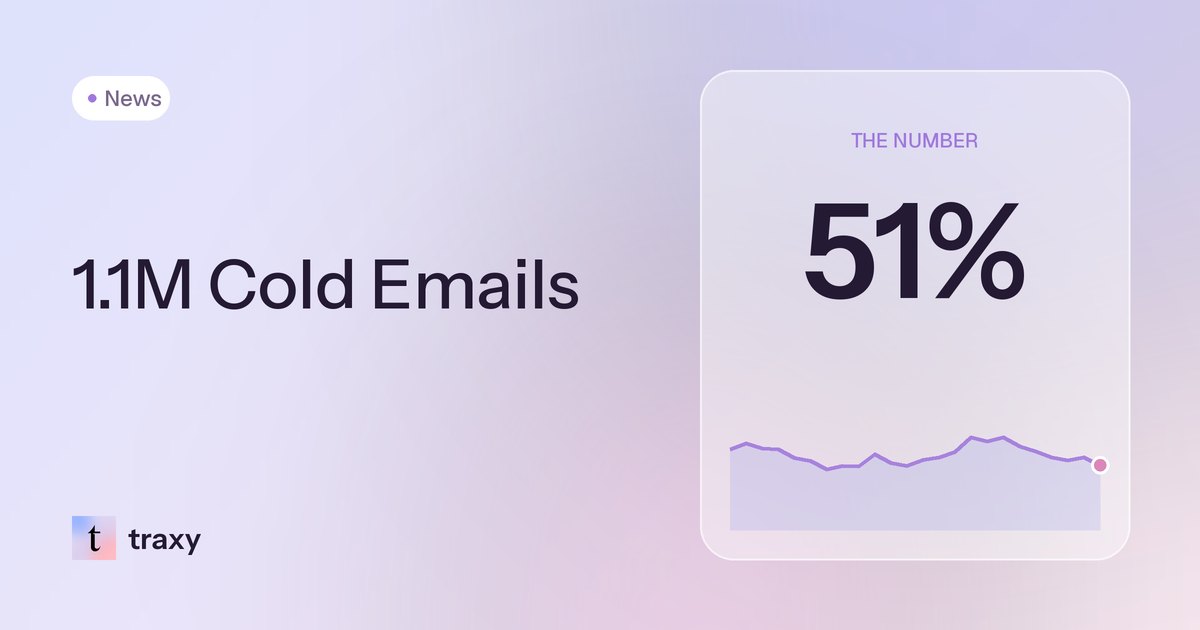
Ending a cold email by asking for a call performed worst in new research from outbound agency Sales.co. The study covers 1,118,802 first-touch emails sent between October 6, 2025 and October 11, 2026 across 58 sending workspaces. Emails that offered to send something, such as a short walkthrough, an example or a list, got 0.76% human replies per email. Emails that asked for a call got 0.50%. Sales.co puts the gap at 51%.
Across the full dataset, 7,729 emails got a human reply, 0.69% overall. Sales.co says each of its 11 rules beat the alternative by at least 10% and held when its largest sender, about 16% of volume, was removed.
The numbers
Interested replies: 0.24% for "send something" endings, 0.09% for call asks.
First name in the subject line: +58% human replies per email.
Subject line of 5 to 7 words: +58%.
One or two paragraphs: +52%.
Greeting by first name: +47%.
One question only, and a P.S.: +31% each.
No exclamation marks: +28%. No stats: +12%.
A companion Sales.co analysis of the same period found the second email still got 0.43% human replies per recipient, against 0.50% for the first, and the third got 0.36%. In August, Sales.co's reply-rate study found 59% of human replies were negative.
Why it matters
These are one agency's sends, so they reflect its clients and its copy, and fewer than one in a hundred first emails got a human reply. The rules improve an email at the margins. They can't fix a list of people who had no reason to hear from you.
An offer to send something works because it asks for less trust than a meeting. Timing lowers the same barrier. An email to someone who has already engaged with your team's LinkedIn content reads as a follow-up, and our LinkedIn vs. cold email comparison covers that gap in reply rates.
traxy detects which buyers engage with your LinkedIn content, qualifies them against your ICP automatically, and delivers them to Slack or your CRM while the attention is still warm. Start with a 7-day free trial.
Sources: Sales.co, cold email best practices research (data through October 11, 2026); Sales.co, cold email follow-up reply rates analysis (same period).
Keep reading
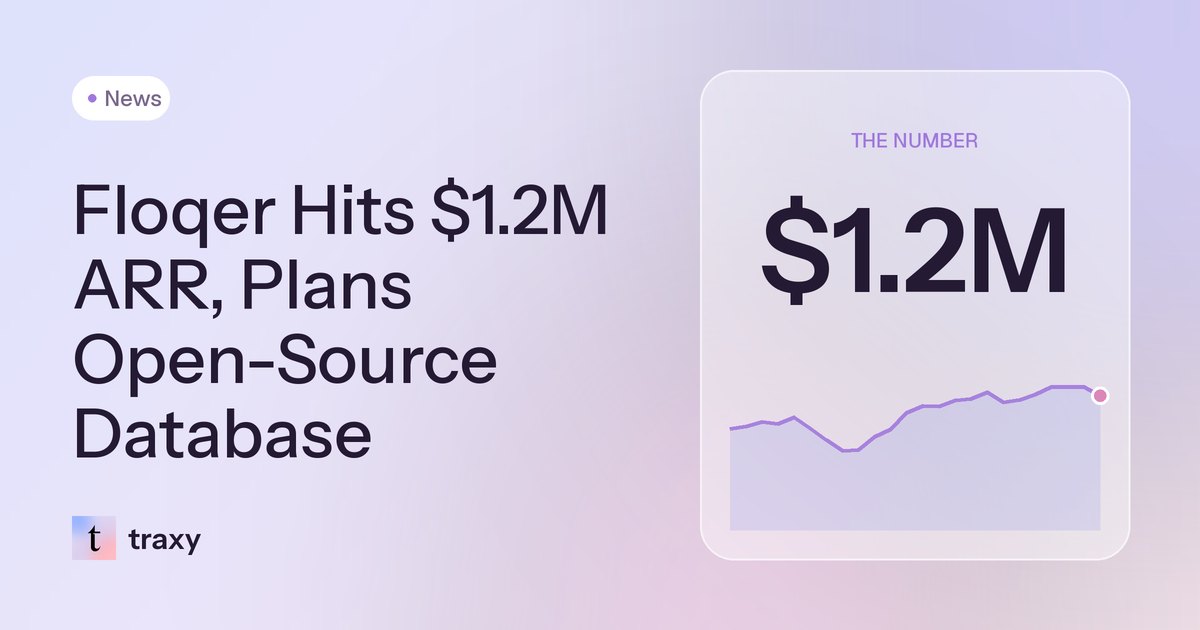
Floqer Passes $1.2M ARR and Will Open-Source Its AI Prospecting Database
Floqer told TechCrunch on October 14, 2026 that it passed $1.2M in ARR and plans to open-source its autonomous customer knowledge database in early 2027.
LinkedIn Brings Job-Title Targeting to TV Through Google's Display & Video 360
LinkedIn said on October 22, 2026 that its CTV ads can now be bought through Google's Display & Video 360, with job title, industry and seniority targeting.
LinkedIn's October API Release Breaks Down Account Engagement by Job Function
LinkedIn's 202610 Marketing API lets the Company Intelligence API filter engaged accounts by job function, one month after it added a seniority filter.