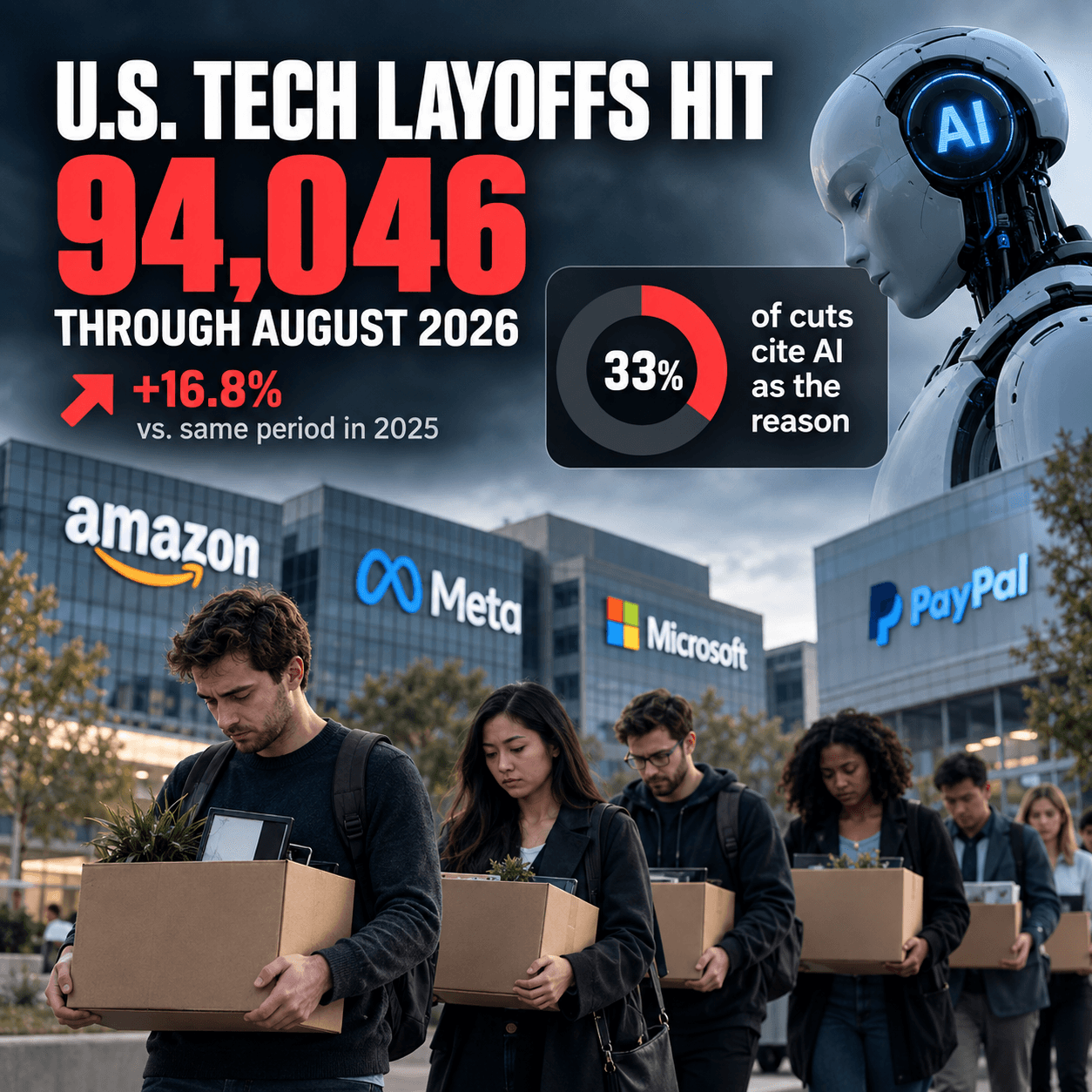
U.S. Tech Layoffs Hit 94,046 Through August — and AI Is Now the Stated Reason for One in Three Cuts
U.S. tech layoffs reached at least 94,046 from January through August 2026, up 16.8% from 80,486 in the same period of 2025, according to the Crunchbase Tech Layoffs Tracker, published September 25. Many of the cuts came as companies redirected spending toward AI and restructured to reduce costs.
The year has come in bursts rather than a steady stream. After falling to 5,151 in December 2025, layoffs surged past 20,000 in January. May recorded 31,513 — including Meta's 8,000-job reduction, about 10% of its workforce — the highest monthly count since March 2023. Since then the pace has fallen every month, down to 2,347 in August. June through August totaled 19,331, 16.2% lower than the same stretch last year, though Crunchbase says it is too early to call a lasting reversal.
Who is cutting
Large public companies account for about 87% of everyone laid off in 2026, similar to 85% last year, according to Layoffs.fyi founder Roger Lee. Amazon leads with 17,388 cuts through August, including a 16,000-person reduction announced in January. Meta follows with 10,400, then Microsoft (4,800) and PayPal (4,760). Block, Cisco and Cognizant recorded 4,000 each, followed by Intuit (3,000), Amdocs (2,900) and Visa (2,600). Among private companies, Epic Games disclosed the largest total at 1,000, then UKG at 950 and MyHeritage at 500. Uber reportedly cut 3,300 roles in early September.
Oracle's workforce reportedly shrank by about 21,000 in its fiscal year ended May 31, but Crunchbase left that figure out of the tracker because the timing of each cut was unclear.
AI is the reason given, not necessarily the reason
AI was cited in 33% of tech layoff events this year, up from 1% in 2024, Lee said, and his tracker attributes 72% of this year's global layoffs to it. But he told Crunchbase there is little evidence AI is actually doing the work of the people let go. His read: established companies are spending heavily on AI and cutting elsewhere to pay for it.
Andrew Challenger of Challenger, Gray & Christmas describes two effects: some work, such as coding, now needs fewer people, while companies also cut in one part of the business and hire in AI-focused teams at the same time. Some are already reversing course — Amazon is reportedly contacting eligible former employees about open roles.
Why it matters
Every one of these cuts happened inside somebody's target account. Restructuring moves budget, reshuffles buying committees and takes champions out of the building, often with no announcement a seller would see. A contact list built in January is quietly wrong by September.
That makes firmographic and org-chart data the least reliable input right now, and person-level behavior the most reliable. The people still at an account — or newly arrived at one — show where attention is going through what they engage with. Buyer intent signals that come from a named person acting this week hold up through a reorg; a static record doesn't. Tracking those buying signals on LinkedIn is how you see who is still in the room.
traxy detects which buyers engage with your LinkedIn content, qualifies them against your ICP automatically, and delivers them to Slack or your CRM while the attention is still warm. Start free with 200 credits a month.
Sources: Crunchbase News, "Tech Layoffs Outpace 2025 As Big Companies Shift Spending To AI" (September 25, 2026); Crunchbase Tech Layoffs Tracker; Layoffs.fyi.